Branding prompts work when they translate a brand brief into repeatable visual decisions. The useful prompt is not just a stylish request; it locks audience, positioning, palette, composition, reference-image rules, and the parts of the brand system that should be added later by a designer.
TL;DR: turn the brand brief into controllable prompt layers
- Start with the brand job: moodboard, identity direction, campaign poster, product visual, or logo exploration.
- Write the audience, positioning, palette, materials, and layout rule before style adjectives.
- Use reference images when a product shape, face, packaging system, or existing color language must stay stable.
- Keep final typography, legal copy, and production logos out of the generated image; reserve clean space for them.
- Save the prompt version that solves the visual system, then duplicate it for the next campaign asset.
Branding prompt formula
| Layer | What to write | Why it matters |
|---|---|---|
| Brand role | Moodboard, identity poster, logo direction, product campaign, profile visual, or social template. | Different brand jobs need different output checks. |
| Audience and position | Who the brand is for and what it should signal: premium, playful, technical, local, editorial, or accessible. | This prevents generic luxury or generic startup styling. |
| Visual system | Palette, material, type direction, layout grid, photography style, and motif. | The system makes later images feel related. |
| Reference handoff | What the uploaded reference controls, and what the model may reinterpret. | Identity and packaging stay stable only when the reference role is explicit. |
| Output rule | Aspect ratio, no final text, no watermark, blank logo/headline area, or presentation-board format. | Brand work usually needs downstream editing. |
| Review check | The first failure to inspect: wrong tone, weak hierarchy, bad logo area, or inconsistent palette. | Iteration becomes a diagnosis instead of a full rewrite. |
Scenario matrix
| Brand job | Prompt focus | Use a reference image when | First failure to fix |
|---|---|---|---|
| Moodboard | Palette, materials, photography language, typography direction, and layout board. | A current brand palette or product surface already exists. | The board looks pretty but not ownable. |
| Identity poster | Hero mark area, campaign composition, negative space, and brand tone. | A logo, monogram, mascot, or symbol shape must be protected. | Generated text, crowded layout, or weak logo zone. |
| Product campaign | Product silhouette, material detail, audience, background, and headline-safe space. | Shape, packaging, label, or color must remain recognizable. | Product drift or a frame with no room for copy. |
| Personal brand visual | Face identity, wardrobe, color system, profile crop, and platform format. | The person must remain recognizable across assets. | Face drift, over-stylized skin, or off-brand wardrobe. |
| Logo direction board | Simple mark language, spacing, contrast, and exploration thumbnails. | You need to echo an existing symbol family without copying it. | Tiny fake text or over-detailed marks. |
Copyable branding prompt blocks
Copy one block, replace the bracketed variables, and keep the prompt in English for the generation step. The surrounding article can be localized, but the public prompt blocks should stay paste-ready.
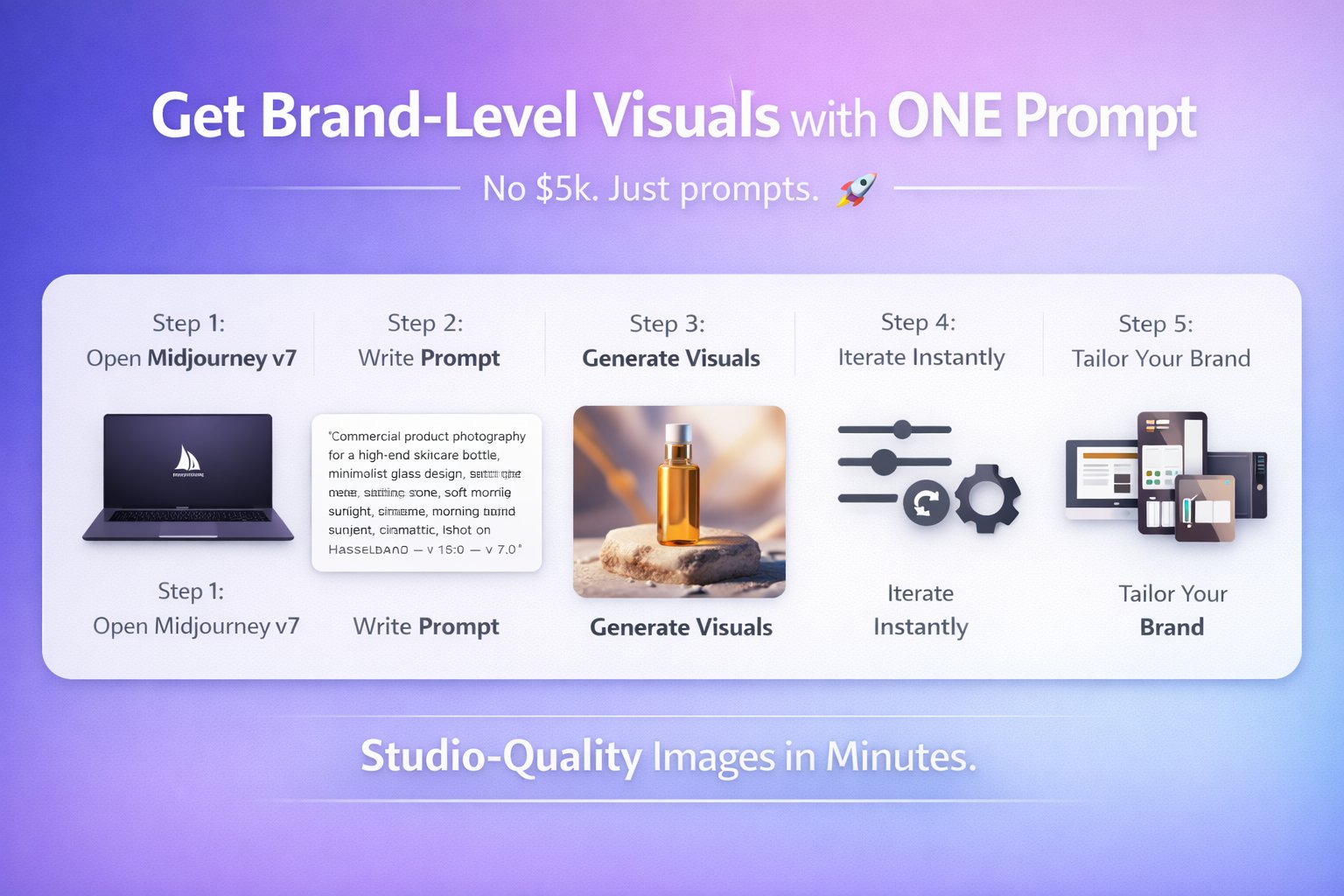
- Brand moodboard: Create a premium brand moodboard for [brand], audience [audience], positioning [positioning], palette [colors], typography direction [type style], materials [materials], 3x3 editorial layout, clear labels as placeholder blocks only, no readable final copy, 16:9 aspect ratio.
- Identity poster: Modern editorial branding poster for [brand], hero symbol inspired by [visual cue], strong negative space, palette [colors], refined grid system, luxury campaign lighting, logo area left blank for later design, 4:5 aspect ratio, no watermark.
- Product campaign: Premium campaign image for [product], brand tone [tone], audience [audience], background [setting], controlled shadows, consistent palette [colors], room for headline and logo added later, commercial photography realism, 9:16 aspect ratio, no generated text.
- Logo direction board: Explore three logo direction thumbnails for [brand], simple geometric mark language, monochrome plus one accent color, clean spacing, flat presentation board, no final trademark claim, no tiny unreadable text.
Worked example: from brand brief to first campaign prompt
Raw brief
A boutique sparkling-water brand needs a launch visual. The audience is design-aware urban buyers, the position is crisp and optimistic, the palette is silver, cobalt, and citrus green, and the bottle shape must stay recognizable.
Prompt version 1
- Premium product campaign image for a boutique sparkling-water bottle, design-aware urban audience, crisp optimistic brand tone, silver cobalt and citrus green palette, clean studio stage with subtle condensation, bottle centered with strong silhouette, controlled shadows, room above and right for headline and logo added later, commercial photography realism, 4:5 aspect ratio, no generated text, no watermark.
First-result diagnosis
If the color system is right but the bottle shape changes, add a reference image and state that the reference controls silhouette, cap color, and label placement. If the bottle is accurate but the campaign feels generic, keep the subject stable and tighten audience, surface material, lighting, and negative space.
Mistake and fix table
| Failure mode | Fix first | Do not start with |
|---|---|---|
| The brand looks generic | Add audience, positioning, palette, material, and one distinctive visual cue. | More words like premium or modern. |
| Logo or text is broken | Reserve a blank logo/headline area and add typography later. | Asking for exact final copy inside the image. |
| Product or face identity drifts | Attach a reference and name what it controls. | Changing the whole art direction. |
| Moodboard is beautiful but unusable | Add channel, board layout, and concrete decision labels. | Collecting more unrelated aesthetics. |
| Campaign assets do not match | Duplicate the solved prompt and replace only channel, crop, or subject. | Rewriting every asset from scratch. |
Use branding prompts inside Vogue AI
Inside Vogue AI, treat each branding prompt as a reusable asset. Start from the prompt-library example closest to the job, choose GPT Image 2 for stronger instruction control, Nano Banana for fast variations, and Midjourney for mood-forward visual exploration.
- For identity-critical work, upload the reference first and define what must not change.
- For campaign concepts, generate a text-free composition and add final typography in a design tool.
- For moodboards, ask for a board that shows decisions, not just a collage of attractive images.
- For logo direction, use generated output as exploration, not as a final trademark-ready mark.
- For repeat campaigns, name the winning prompt by job and ratio, such as brand-campaign-4x5-cobalt-reference-bottle.
FAQ
Can I copy these branding prompts directly?
Yes. Copy the English prompt block and replace the bracketed variables. Keep the structure stable for the first generation so you can see whether audience, palette, or composition caused the result.
Should a branding prompt generate the final logo?
Use it for exploration and direction, not final trademark work. Reserve the final logo, lockup, and typography for a design tool and proper review.
When should I use a reference image?
Use a reference when identity matters: product shape, packaging, face, existing symbol, palette, or layout system. Tell the model exactly what the reference controls.
Which model should I try first in Vogue AI?
Start with the failure risk. Use GPT Image 2 for instruction control, Nano Banana for quick image-to-image variations, and Midjourney for mood exploration.
How do I keep a campaign consistent?
Save the prompt that solved the first asset, then duplicate it. Change only ratio, channel, product, or setting while keeping palette, audience, and reference handoff stable.
What should I do after a bad first result?
Name the failure before rewriting. Fix identity with a reference, hierarchy with crop and negative space, generic style with audience and palette, and text problems by removing final copy from generation.